Field guide / Competition briefings

Briefings Everyone Can Follow

A technical meeting is a chain of decisions, instructions and questions. Language support works best when the room, the terminology and the record are prepared together.

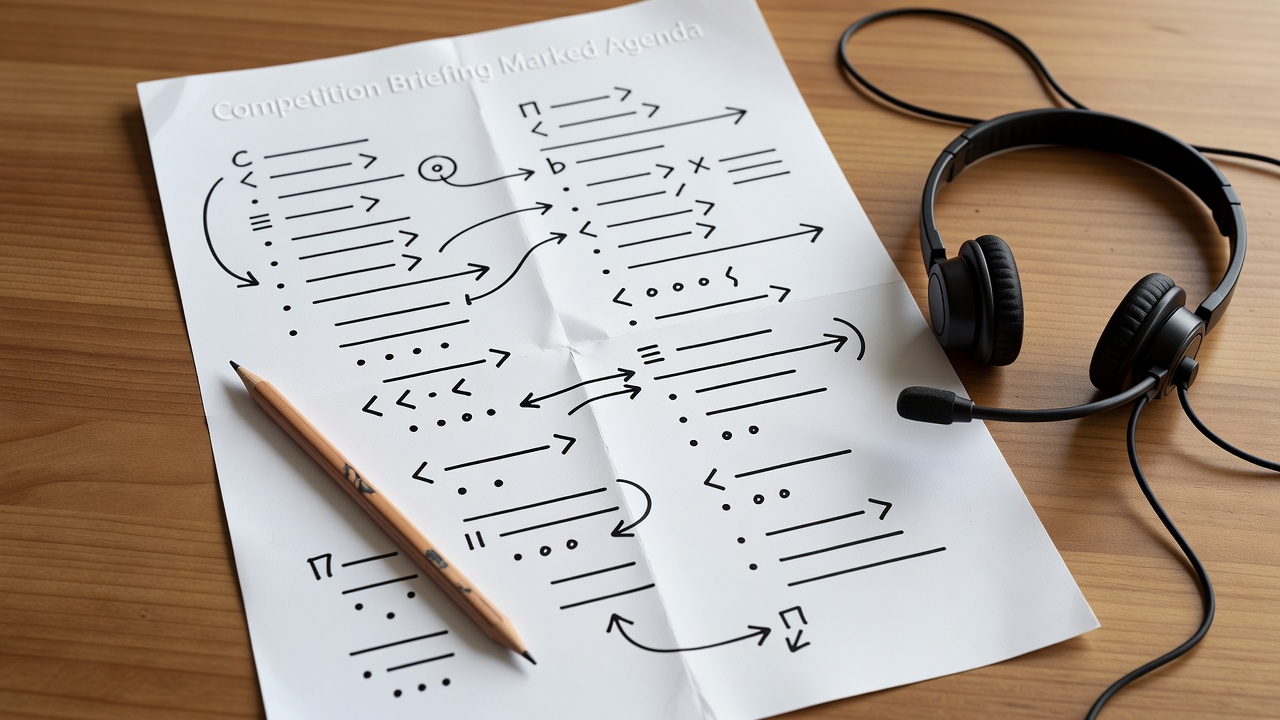
Annotated competition briefing agenda with a pencil and interpreting headset
A current agenda and a clear speaking protocol are part of the interpreting setup.
The pressure point

Shared words do not automatically mean a shared instruction

Officials, coaches and operations staff may attach different meanings to the same abbreviation. Resolve the source meaning before expecting an interpreter to carry it across languages.

01 / Define the room

Know who needs to participate

List the groups attending the meeting and distinguish their needs: listening to an instruction, asking a question, presenting a change or approving a decision. Record the actual language directions required. A meeting with English presentations and questions in several other languages has a different workflow from a fully multilingual discussion.

Ask about signed-language access, hearing support and remote participation early. These are not interchangeable requirements, and one accommodation does not automatically satisfy another. Include the people arranging accessibility in the planning conversation. Do not infer an attendee’s preferred language, comprehension or access needs from their delegation or passport.

02 / Select the mode

Fit interpreting to the exchange

Consecutive interpreting follows a speaker’s segment and requires planned pauses. It can suit a smaller briefing but changes how the agenda must be timed. Simultaneous interpreting runs alongside the speech and requires an appropriate professional and technical setup. Whispering to a cluster of delegates in a noisy room is not a reliable substitute for a designed system.

Discuss staffing, working conditions, breaks and language directions with the provider rather than guessing a universal interpreter-to-attendee ratio. For remote or hybrid meetings, identify the platform, audio feeds and fallback route. The right arrangement depends on the task, duration, language combination and conditions, not simply the number of chairs.

03 / Prepare the pack

Make specialist terminology available

Share the agenda, presentation, speaker names, venue map, relevant rules and a short terminology list sufficiently in advance for preparation. Flag passages that will be read verbatim. Explain unusual abbreviations and identify the source of authority for any rule quoted on a slide.

World Athletics, World Aquatics, FIBA and the International Tennis Federation publish sport-specific materials, but their terminology should not be casually mixed. Supply the current documents applicable to your competition. A term that is familiar in one sport may have a narrower meaning in another. Where a translated label remains uncertain, have the technical owner clarify it before the live meeting.

04 / Run the exchange

Make audio and turn-taking non-negotiable

Test microphones using the people and positions that will actually be used. A speaker audible to the front row may still be inaudible to a remote interpreter. Ask participants to use the microphone for every contribution, including short corrections, and repeat questions from the floor when needed under the agreed protocol.

The chair should identify speakers, allow one voice at a time and pause when clarification is requested. Discourage side conversations that become a second unofficial briefing. Read out important changes to dates, distances, lane allocations or deadlines instead of pointing silently at a slide. Clear delivery helps everyone, including participants listening directly in the source language.

05 / Confirm responsibility

Separate interpreting from rule adjudication

An interpreter can convey a question about a protest deadline; they should not be made responsible for deciding what that deadline legally or procedurally means. Refer the substance to the authorised official. Where a phrase is ambiguous, allow a clarification exchange rather than asking the interpreter to choose the most convenient interpretation.

Medical, anti-doping and safeguarding discussions may require separate confidential arrangements and suitably qualified professionals. The World Anti-Doping Agency’s materials can inform terminology preparation, but they do not replace the procedures and personnel applicable to the event. Keep confidential case details out of the general briefing pack.

06 / Close the loop

Publish the decision, not a memory of it

At the end of each important item, have the chair state the agreed action and responsible role. Record unresolved questions explicitly. A spoken interpretation is not automatically an approved written translation, and an attendee’s informal notes should not become the definitive multilingual record.

Issue a concise written summary through the designated document owner, with version control and review for each required language. If the meeting changed an instruction, identify which previous version is superseded. Carry the same approved terminology into event documents and media preparation so the next audience does not encounter an avoidable change of meaning.